
News
Feb 13, 2026
Setting a new course: Accomplished cross-country skier setting gold standard as a P.T.
Sarah Deardorff slowly strung together clues about her physical therapist’s background.
He looked athletic. And he sure knew a ton about sports injuries – both physiologically and mentally. Maybe he was a runner, a marathoner, a triathlete like Sarah had become in middle age.
She eventually discovered her NovaCare Rehabilitation therapist, Tom Videtich Bye, was a skier – not the first guess in Wilmington, Delaware, where the beach is closer than the mountains.
“It took probably two months of probing questions,” Sarah said. “He’s very, very modest about his accomplishments.”
Ultimately, Sarah did what any of us would have done in her situation.
She Googled Tom.
With two, unhyphenated last names, he wasn’t hard to find.
She linked to his bio from Division I Michigan Technological University, where he was a scholarship, cross-country skier and team captain for three years from 2016-18. She learned he participated in multiple collegiate championships and was a member of the junior national Nordic (cross country) team that competed at worlds. He once finished in the top three among juniors at nationals, earning All-American status.
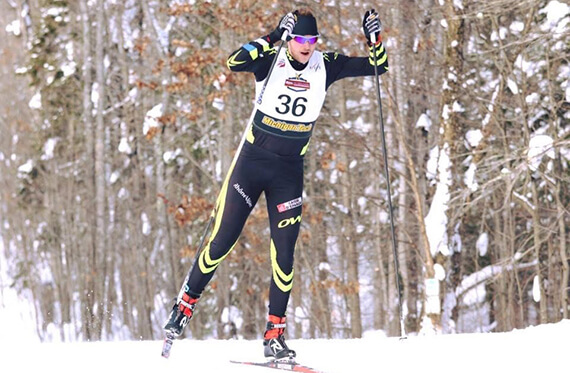
Tom wasn’t just an athlete a decade ago; he was an elite one.
“I did Google him,” Sarah said. “And I was like, ‘Oh my gosh, you’re actually somebody important.’”
Chasing the dream
Growing up in Eden Prairie, Minnesota, a southwestern suburb of Minneapolis, Tom gravitated toward outdoor sports, playing tennis, running cross country and skiing. He was intrigued when his older sister joined the high school’s ski team as a freshman, and he did the same when he arrived there.
He fell in love with the cross-country aspect of the sport, a mix of sprint and long-distance running and skiing. He improved, met some of his closest friends and was part of a Minnesota high school state championship squad. He finished second in states as a senior.
Tom was hoping to ski at the University of Utah, the country’s premier collegiate program, but never received an offer. He took a year off after high school graduation, skied the country and world while training with an elite pro team and then accepted an athletic scholarship to Michigan Tech.
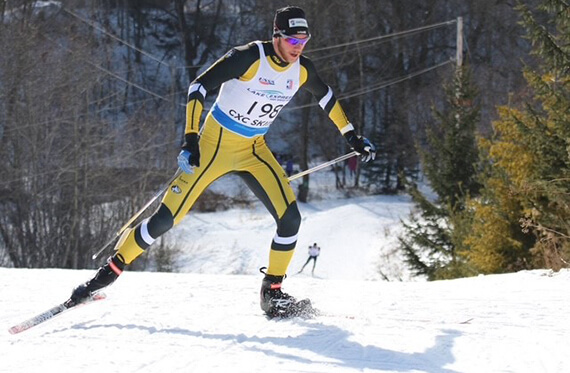
He wanted to be a national and world champion. Neither happened.
He participated in the collegiate cross-country skiing championships four times; his best finish was 14th. As a senior, he reached the quarterfinals, placing 24th of 191 skiers in freestyle sprint.
Tom made the selection pool for the 2018 national team, but didn’t qualify.
“I had aspirations for it, but I guess I wasn’t quite good enough, and then I stopped doing it for a while after college,” he said. “I don’t know what could have been, but that’s as good as I was.”
After he graduated, he pursued another childhood dream: Becoming a physical therapist.
Chasing the dream, part 2
Perhaps implausible for a top-shelf athlete, Tom is adamant that becoming a physical therapist was among his primary aspirations.
It started in second grade, when he had persistent hip issues. Doctors never pinpointed the exact cause, and he has dealt with the condition intermittently throughout his life. But he remembers working with physical therapists, and their care impacted him at a young age.
As an athlete, injuries are part of the backstory. Tom’s scariest came in 2015 while training with Michigan Tech. He tangled skis with a teammate during a downhill exercise and fell. Hard.
He was checked initially for a concussion and told to contact his athletic trainer if symptoms worsened. At dinner that night, he couldn’t see the table in front of him.
A friend took him to a nearby rural hospital, which transferred him two hours to a larger facility. He initially sustained bleeding on the brain and entered concussion protocol. Ultimately, he needed to pass impact tests to return to competing, a process that took roughly a month.
He now understands it was a valuable learning experience – one that has assisted him in his current profession.
“Some patients are having a tough time, and they're probably like, ‘Does this guy even understand what I'm going through?’” Tom said. “Whether it’s a torn Achilles or hip pain or a concussion, I can be like, ‘I know what you are experiencing,’ and then I can talk them through it. A big aspect, especially for athletes, is the mental component of an injury. Feeling left out from the team because you’re injured. I like helping them through that.”
Taking the next step with help
During the COVID-19 shutdown, Sarah jumped into running as more than a passing hobby. A former collegiate field hockey player at the Division III level, she’s always been active and competitive. In her 40s, an interest in running morphed into a desire to complete marathons, triathlons and other intensive races.
In 2024, she dealt with nagging discomfort in her left leg, from her hip to her knee, that turned into a searing pain around mile 10 of a marathon in New York state.
“I had to drag myself the next 16 miles,” she said.
She switched to triathlons so she wouldn’t have to run as much; the pain still didn’t go away. By August, Sarah sought help at NovaCare’s Wilmington Silverside center, where she was paired with Tom.
At first, Sarah wasn’t particularly optimistic about enduring physical therapy again. She had received it before from another company, basically electrical stimulation and heat to help her soothe the pain, but nothing to fix the physiological issue.
It was a different experience with Tom, who devised specific stretching and strengthening exercises that targeted the root cause of Sarah’s discomfort. He took strength measurements of her legs every few weeks to show her progress with the left side and how much further she needed to advance to reach the baseline established by her right.
“What impressed me is how he was able to tailor my program and my workouts to an athletic level, where he knows he can push me a little bit harder,” she said. “He gets the athlete mentality, and he knows I want to get back out there.”
Rolling along with another sport
Bodies change as we get older, but, mentally, once an athlete, always an athlete.
Tom, now 30, came to Delaware to earn his doctorate in physical therapy, leaving behind the snowy trails of Michigan and Minnesota. The move didn’t extinguish his competitive fire, however.
Four years ago, he resumed rollerskiing, which he previously used as a summer training technique. It’s the city cousin of cross-country skiing, where wheels are attached to the ends of smaller skis and athletes use poles and the same motion on pavements and asphalt as they would on snow.
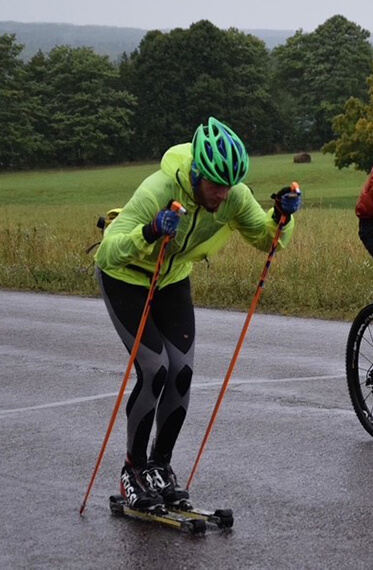
In 2025, he competed against national team members and local clubs on a track in Lake Placid, N.Y., the famed winter sports locale where he had previously cross-country skied.
He normally keeps his rollerskiing exploits, like his cross-country skiing ones, under wraps unless patients – such as Sarah – probe a little deeper. Then Tom will discuss his sport or share a picture or video. It occasionally comes up when he is relaying pieces of his own story to further connect with injured and struggling patients.
Tom is extremely proud of his past and the experiences cross-country skiing afforded him. He said he breaks into a large smile whenever he talks about those days. But he also doesn’t want to be viewed as bragging. Or competing with his patients. So, he’ll come clean. But not often.
“It’s not like every week or so,” he said. “Like, I’m not doing that.”
The subject may arise a little more in the future – if Tom meets another goal. He has completed all the requisite, emergency-safety training and is now part of the physical therapists’ pool for national ski and snowboard events. He hasn’t been called to work one yet, but he can’t wait to travel full circle with the winter sport that shaped him.
“I’m assuming it’s similar to when I was an athlete traveling with them, where it was a really cool experience,” he said. “This is just from the support side instead of the athlete side.”
Giving full attention
Tom’s treatment has Sarah on the path to recovery. She is targeting June for her next triathlon.
Not only has she fully bought into the power of physical therapy, but she’s brought along her son, Atlee, a 17-year-old sprinter who has dealt with season-altering hip issues. Working with Tom, Atlee is running pain free for the first time in more than a year.
“I was like, ‘Give this guy a chance,’” Sarah told her son about Tom. “Because teenagers don’t really want to do this stuff, but (Atlee) has. Because Tom has made it interesting and exciting.”
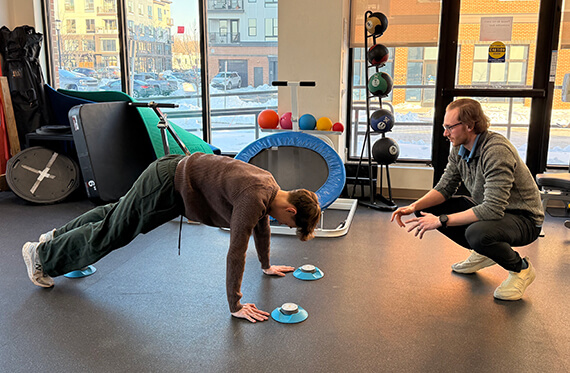
Atlee wants to run in college, so Tom also has answered questions about recruiting, choosing the right school and the demands of collegiate athletics. What started as a skeptical dip into physical therapy has become much more for Sarah and her family.
“Tom really has made a huge impression on me as well as my son,” she said. “He is just a really nice person that listens to you and gives you his full attention.”
For years, Tom’s attention was focused on becoming a national and world championship cross-country skier.
What he chases now, though, is also rewarding: the thrill of helping others reach their goals.
He’s accomplishing that one daily.